
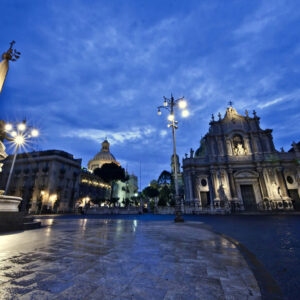
Piazza Duomo
It’s the main square in Catania; via Etnea, Via Vittorio Emanuele and Via Garibaldi, the three main roads of the old town, cross in this place. It is surrounded by many monuments and in its centre is placed the famous “Elephant’s fontain”, built by Gianbattista Vaccarini. … read more
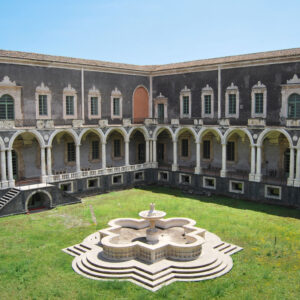
Benedictine Monastery
It’s a “jewel” of the late Sicilian Baroque architecture and an example of integration among different periods, it is shown in UNESCO’s World Heritage Site. From 1977, the plezus monastic houses the Humanities faculty. … read more
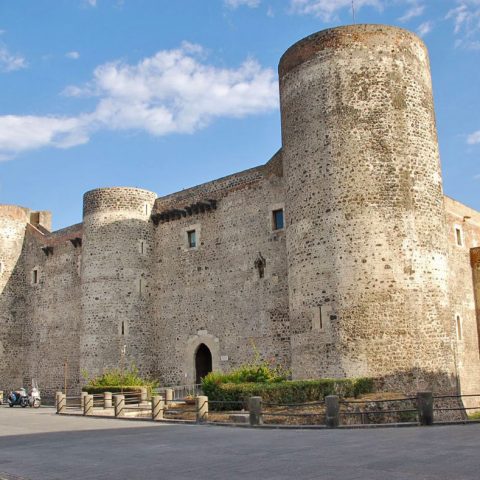
Ursino Castle
Between 1239 and 1250, Frederick II ordered to build the Ursino Castle for defensive purpose of the East coast of Sicily and it was on a promontory surrounded by sea. In 1669, the eruption gets the Castle away from the sea. … read more
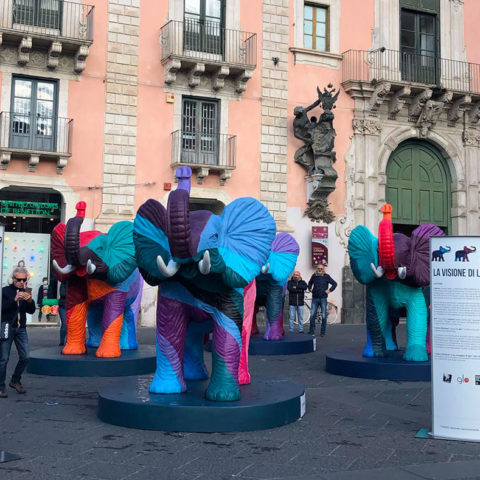
Piazza Università
It’s located not far from Piazza Duomo, along the via Etnea, Piazza Università takes its name from the Siculorum Gymnasium also known as Palazzo Università. The characteristic of this square are the four bronze lamps positioned at its four corners depicting characters of folk tales from Catania. … read more
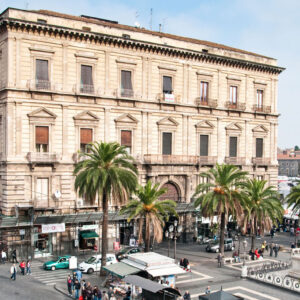
Piazza Stesicoro
Piazza Stesicoro takes its name from the Greek poet Stesichorus. It is crossed and divided in two parts by the main street, via Etnea. The two sides of the square have different architectural styles: on East stands the monument dedicated to Vincenzo Bellini, on the other side the roman amphitheatre. … read more
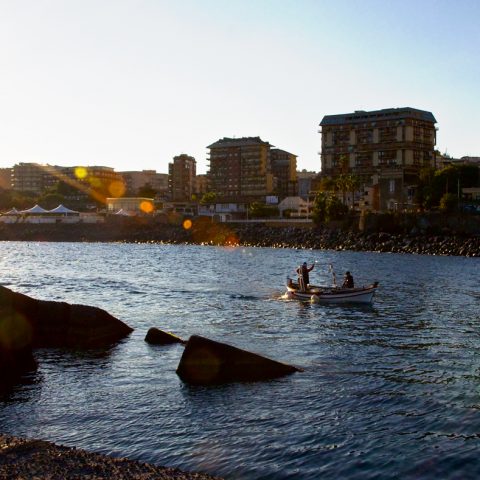
San Giovanni Li Cuti
San Giovanni Li Cuti is the small Catania’ seaside district where is the most typical beach in the city. It’s an integral part of the town, the features that makes it a unique place are the black volcanic sand and rocks. The ‘urban’ beach choosen in summer by people of Catania. … read more
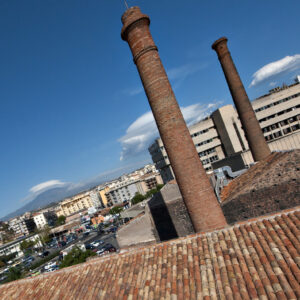
Le Ciminiere
Le Ciminiere were the chimneys to disperse the fumes from Sulphur factories placed in East area near to Catania Central station. Around the remains of the nineteenth-century industrial complex, it was built a multi-purpose center for trade fairs, exhibitions and congresses. … read more
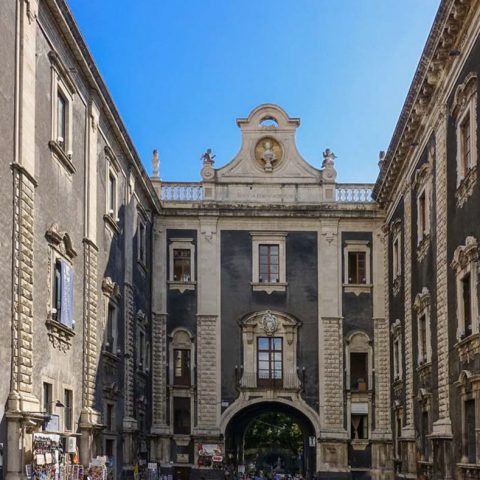
Uzeda gate (porta Uzeda)
Uzeda gate connects the two parts of the old Clerks’ seminary, it was built in 1695 by the Duke of Camastra and was dedicated to the Viceroy Paceco Uzeda. It’s considered a symbol of the city and it is built in typical Catania baroque style: lava stone and white marble. … read more
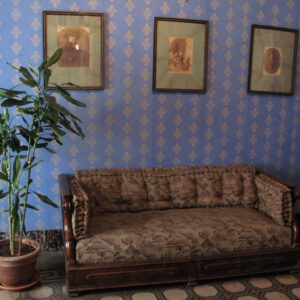
Giovanni Verga Museum
It’s located on the second floor of the nineteenth-century palace in Via Sant’Anna, the apartment, where now is based the regional museum, before was the famous writer Giovanni Verga’s home. Inside, are preserved the intact furnishings and objects that belonged to the writer. … read more
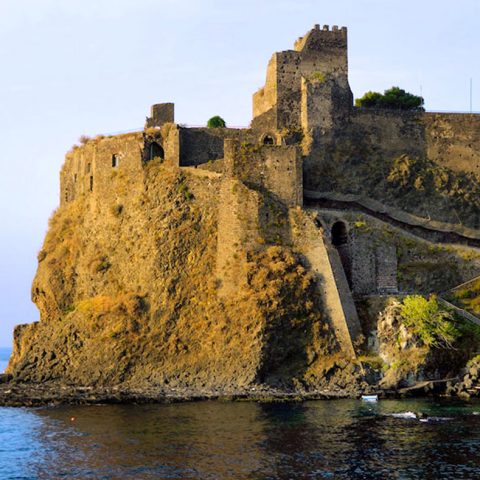
Aci Castello Castle
The seaside village of Aci Castello is just a few kilometers from Catania, it’s famous for its basalt rock where on top stands the turreted and crenellated castle which gives its name to the city. Inside, there is the civic museum. … read more
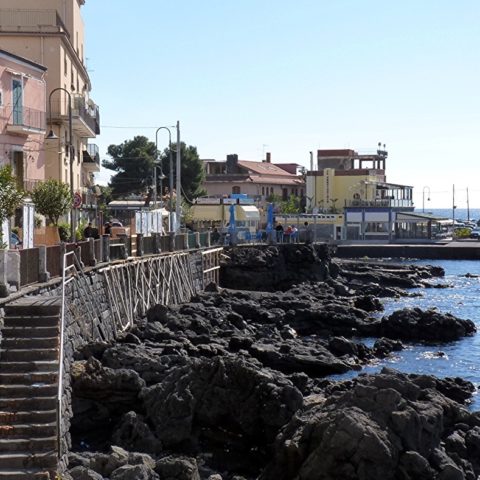
Capomulini
The village of Capomulini is located at about five kilometers from Acireale. This seafaring village, which borders the northern side of Catania Gulf, until the Middle Ages was the “old” Acireale. Not to be missed the natural harbor. … read more
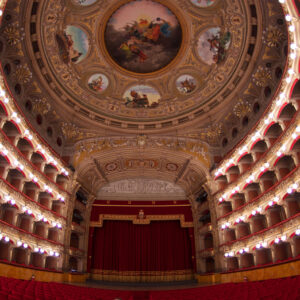
Massimo Bellini Theatre
The Massimo Bellini Theatre is the place where it stages the opera. During its opening, in 1890, it was staged the representation of ‘Norma’ by Vincenzo Bellini. The central hall is composed of four tiers of stages and galleries on which dominates the evocative fresco. … read more
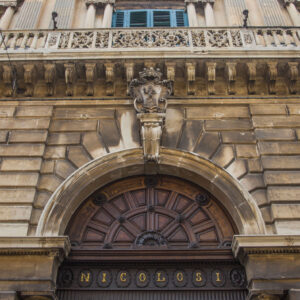
Nicolosi Palace
Between the eighteenth and nineteenth centuries Acireale nobles built their residences in Corso Umberto; Nicolosi Palace is one of them. The palace was built after the earthquake of 1693 and restored in late Baroque style, made following the enlargement of today’s Corso Umberto. … read more
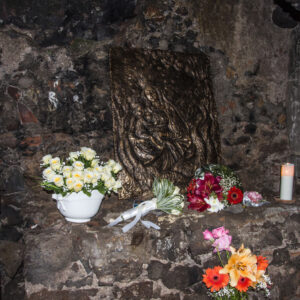
Sanctuary of the Madonna of the Sciara Mompileri
In 1537 and in 1669 two lava flows, born as a result of the eruptions of Etna, hit the ancient sanctuary full of sacred works. For years, people dug without any success until 1704, when it was found the stature of Madonna delle Grazie. From then, near to it there is a small church. … read more
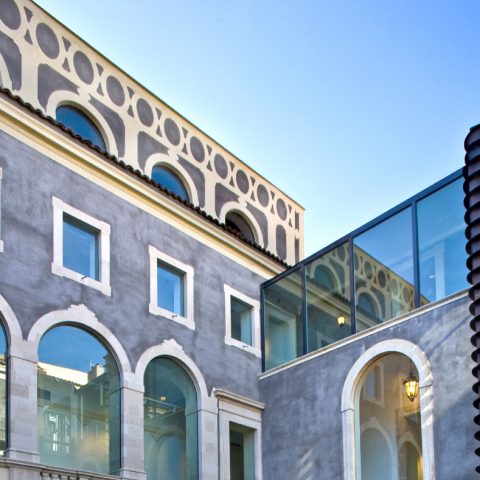
Palazzo Valle
The Palazzo Valle is perhaps the most beautiful baroque buildings designed by the famous architect Gianbattista Vaccarini. From 2004, Fondazione Puglisi Cosentino is in the inner courtyard, at the second and third floor of the baroque palace, hosting permanent and temporary exhibitions. … read more
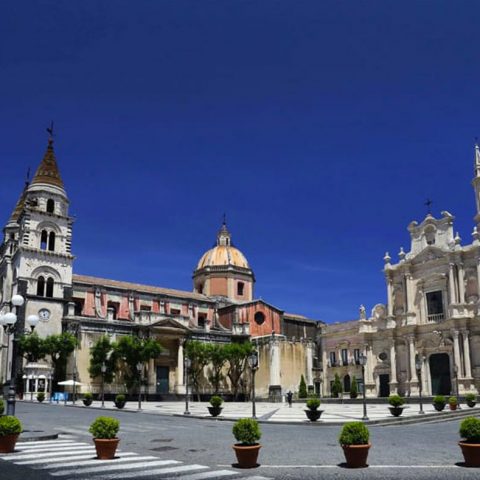
Palazzo di Sangiuliano
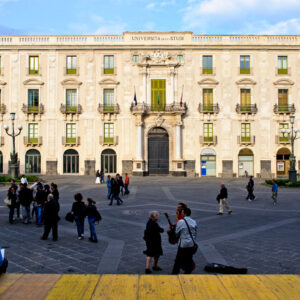
Palazzo di Sangiuliano is one of the nobilty palaces of the city. It was built, using various colored marbles between 1738 and 1745 at the request of Paternò Castello’s family, and designed by the architect Vaccarini. Currently the rooms are occupied by different commercial activities. … read more
Piazza Carlo Alberto
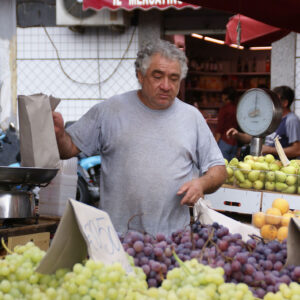
Piazza Carlo Alberto takes its name from the Piedmontese King of the nineteenth century. It is located in the historical center of Catania. The baroque square, bordered by the Church of the Madonna of Carmelo and the Church of St. Gaetano alle grotte, is famous because hosts the popular market. … read more
Palazzo Gioieni D’Angiò
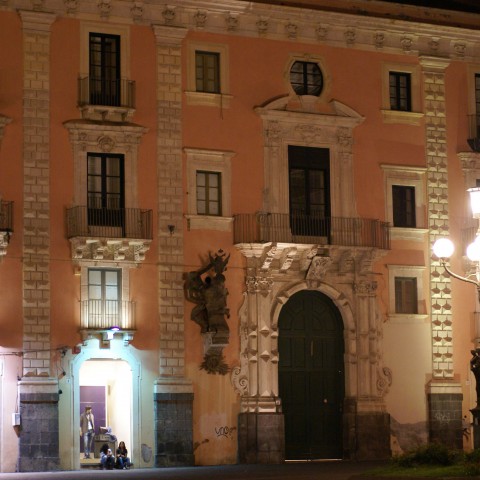
Palazzo Gioieni D’Angiò was the residence of the Duke Giuseppe Gioieni D’Angiò, who commissioned its construction in the late eighteenth century. The design of this building, which is located in piazza Università, was conceived by the architect Vaccarini in Sicilian baroque style. … read more
Palazzo della Cultura
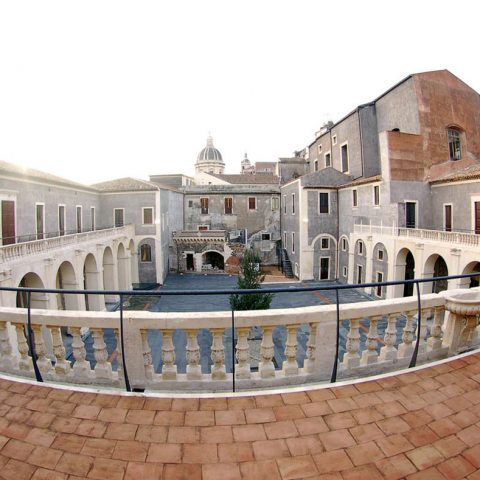
After the terrible earthquake in 1693, the remains of the former San Placido’s Monastery and the oldest Platamone’s palace were integrated each other to realize the Palazzo della Cultura. The palace still presents some elements in late medieval style. … read more