
San Giorgio Dome
Churches, Culture

Salita Duomo, 13 - 97100 Ragusa
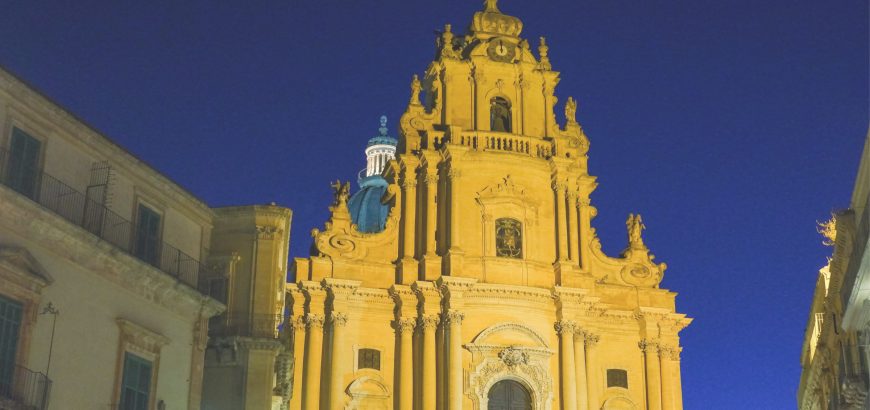
The Cathedral of San Giorgio is the iconic symbol of Ragusa. A UNESCO World Heritage site, a triumph of majesty and opulence: the Cathedral of San Giorgio is beautiful on the outside and precious on the inside, featuring canvases, statues, and even a monumental 16th-century relic.
Sometimes every word falls short. Just like right now.
How best to describe the sense of magnificence you will feel when you stand before the majestic staircase of the Cathedral of San Giorgio in Ragusa Ibla? Its brilliant white facade will dazzle you. You will have to look all the way up to take it in completely.
How to convey the richness of its details? The decorations of the wooden doors, the friezes and reliefs of the grand portal, the elegance of the statues of Saint George and Saint James below, and those of Saint Peter and Saint Paul above. How to give you a sense of how much beauty awaits you?
A UNESCO World Heritage site, San Giorgio is the must-see stop in Ragusa Ibla. Loved by film directors and photographers, cherished by tourists, and protected by its faithful.
It is unique starting from its slightly oblique placement relative to the square, a deliberate choice by architect Rosario Gagliardi from Noto: it seems to strike a pose for the millions of admiring glances over the centuries. Construction was completed in 1775—the date is engraved on the spire under the cross—and lasted thirty years, starting from the decision to rebuild the church in a more central position compared to the original site next to the Ibleo Garden. The 1693 earthquake had almost completely destroyed the old building, of which today only the portal remains visible; thus, the community decided to erect the new cathedral where the Church of San Nicola previously stood.
The three-naved interior is rich with precious canvases: D’Anna, Tresca, and Manno are just a few of the period artists who created the paintings. Also to be admired is the statue of Saint George on horseback, created by the Palermitan sculptor Bagnasco; the large reliquary chest in embossed silver foil by Palermitan silversmith Domenico La Villa—both carried in procession by the faithful during the patronal festival in spring—and the 3,368-pipe organ, so remarkable that its manufacturer, “Serassi” of Bergamo, named it “Organum Maximum.”
The hidden gem not to be missed? It is the 16th-century monumental limestone relic by Antonino Gagini, preserved in the sacristy.