
The Palatine Chapel: bridge between East and West
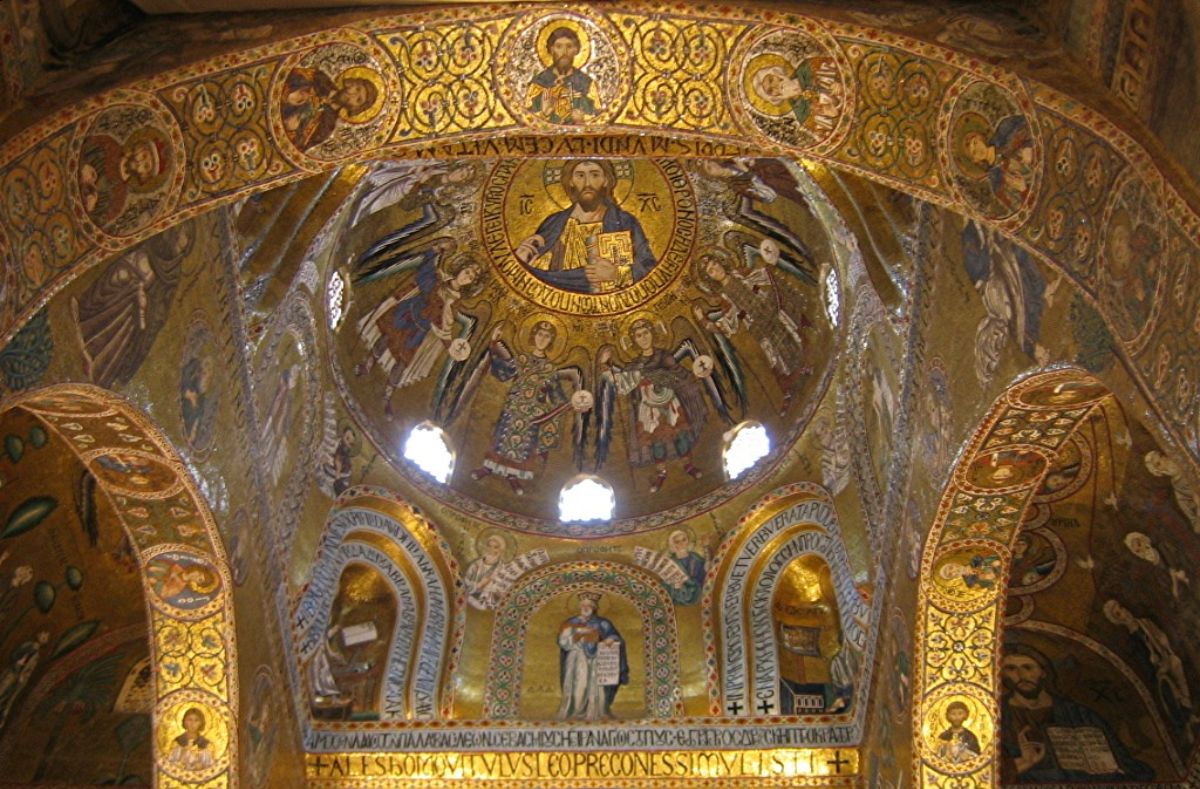
The Palatine Chapel in Palermo, commissioned by Roger II in the 12th century, is a unique masterpiece where Byzantine, Latin and Islamic art come together amidst gilded mosaics, Arabic ceilings and lavish decorations.
As soon as you step inside the Palatine Chapel, you realise straight away that it is not a church like any other. Roger II commissioned it in the 12th century as a symbol of his reign: a place where Romanesque architecture, Byzantine mosaics and Arabic art coexist in harmony. Everything speaks of encounter, power and vision.
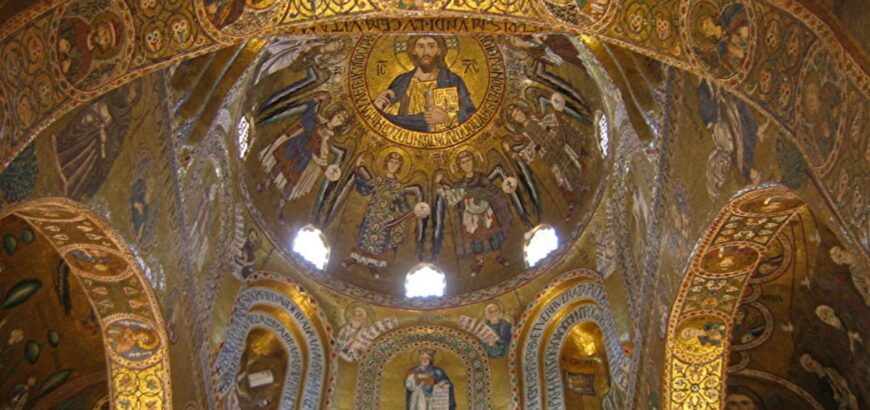
Look up: the golden mosaics dominated by Christ Pantocrator fill the chapel with light. Then discover the muqarnas ceiling, an extraordinary wooden structure of Islamic tradition made of small carved and painted stalactites. The decorations depict court scenes, animals, and banquets: unexpected details inside a church.
The details that tell the story of the kingdom
Don’t stop at the mosaics. Look at the floor made of polychrome marble and porphyry, featuring refined geometric designs. Near the altar rises the great Paschal candlestick carved in marble. In the crypt and treasury, objects and documents emerge written in Latin, Greek, and Arabic—the official languages of the Norman kingdom.