© credits: https://flickr.com/photos/30659367@N00/

© credits: https://flickr.com/photos/30659367@N00/
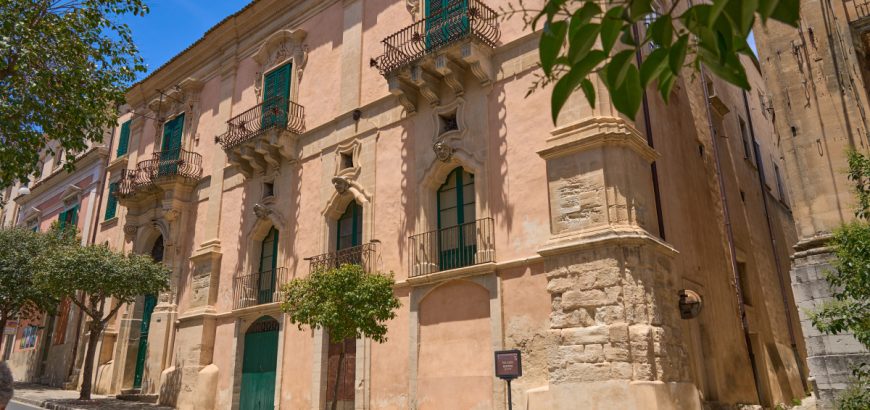
The lord, the rich man, and the poor man. Three grotesque masks (mascheroni) that wink at you, tease you, and make fun of you! They represent the power of social status, that of wealth, and finally the power of self-irony, forming the most distinctive feature of Palazzo Bertini, located at the end of Corso Italia. One of Ragusa’s eighteen UNESCO monuments, it is among the city’s most historic palaces. It was built at the end of the 18th century by Don Floridia and was bought half a century later by the Bertini family, whose name it still bears. Over time, it has undergone several renovations, mainly due to the lowering of the street level which altered the facade, but its masks remain right there, playing with anyone who looks up at them.
Baroque allegory dictates that they represent the beggar (the poor man), the nobleman (the lord), and the man from the East (the rich man). You can recognize them by their features: the first by his deformed face, large nose, and toothless mouth; the second, more elegant, wearing a feathered hat; while the third, the merchant from the East, wears a turban on his head and a large pearl earring. Their placement is not accidental either. Positioned above what were once the three entrance doorways, they watch over everyone who passes by: the lord stands in the center, to his left the rich man, who scrutinizes those arriving from Ragusa Ibla with a provocative gaze, while to the right, the poor man accompanies passersby on their way toward the city.